simple is beautiful
The Online Photographer
2 ... 2 ...

Monday, 4 December 2006

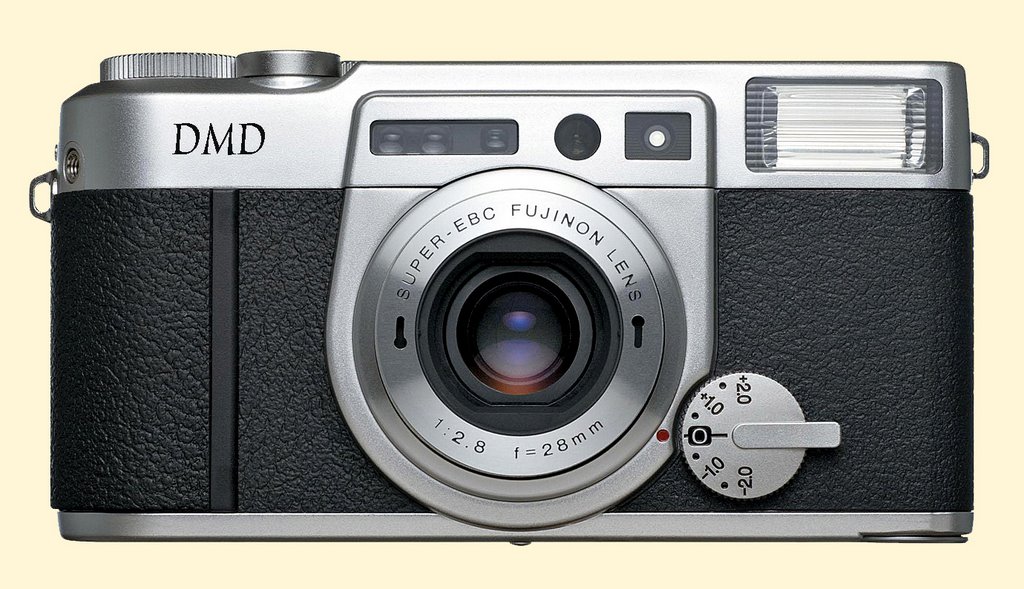
Fuji Klasse Digital!

SA*

I have good news and bad news.

The good news is that the brand-new Fuji Klasse Digital is a high-quality, well-made compact point-and-shoot available in black or chrome. It has a 28mm ƒ/2.8 Fujinon lens like the film version, but it's a full-featured digital camera with a DSLR-sized (23 x 15.5mm) 10-MP Fuji SuperCCD sensor. It has a 2.5" live viewing sceen that tilts upwards, and back controls similar to those on any entry-level digital SLR. The camera is silent, has an almost non-existant shutter lag, takes standard SD cards, and features built-in shake reduction. Unlike the film version it is not a limited edition. Retail price is said to be in the area of $500.

The bad news, unfortunately, is very bad. It's that after pining long and hard for just such a camera, I...made this up. The "Klasse Digital" doesn't exist—at least, not that I or anyone else outside of Fuji know about.

And not only that, but nobody else will build a camera like this, either.

And about that, I have several questions, to wit: why? And, why? Why, why, why? Finally, how hard can it be?

Posted by: MIKE JOHNSTON

* Satire alert

Featured Comment by Eamon Hickey: We may have covered this ground before on one web forum or another, Mike, but I'll echo your frustration one more time. I had hoped that maybe—just maybe by now for god's sake—some camera company somewhere would get a clue and do it.

But that's the photographer/camera lover in me talking. The former Nikon sales rep in me (a shrivelled creature who I'm trying hard to finally kill forever) wonders whether the economics really work for this idea. There are definitely some few thousands of photographers who get the appeal of a very compact, serious camera, but how many are there really? One thing I'm certain of is that the desire for such a camera is over-represented on photo-enthusiast web forums.

I can't speak with authority on issues of digital camera cost accounting, but I suspect the effects of unit volume on price are a bigger barrier here than most of us realize. How much would Canon have to charge for a 400D/Rebel XTi if they could only sell 10,000 units a year instead of 1 million or more. A whole lot more than $800 or so, I'm guessing, and my enthusiasm for an imaginary compact, serious, fixed-lens digicam plunges quickly as the imaginary price climbs above $1,000. At $2,500, that's me in the corner hitting my head against the wall.

But I agree with Eolake that, with the digital camera market exiting its adolescence, we should see some more interesting and varied niches filled (e.g. the Sigma DP-1). Can't happen soon enough for me. The variety of digital camera designs is tragically impoverished compared to all the weird and wonderful film cameras we used to have.

Sorry for the ramble; this is a subject dear to my heart.

Sunday, 3 December 2006

Random Excellence

Luc Delahaye


Posted by: MIKE JOHNSTON

New FILM Camera—What?

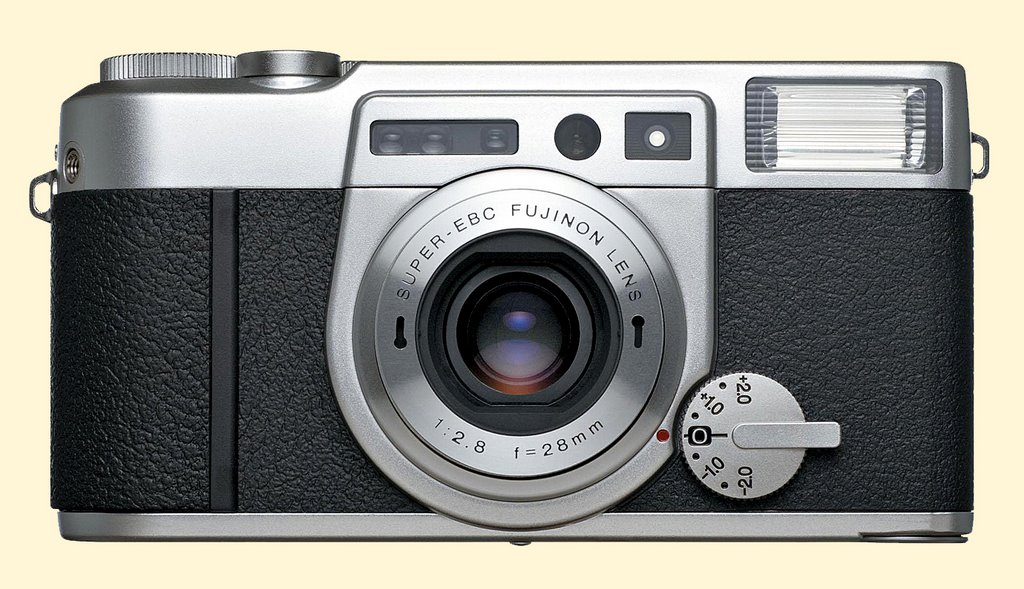
The new Japan-only limited-edition Klasse W

Fujifilm, living up to its anachronistic company name, has a released a new film camera—the Fuji Klasse W, a "premium point-and-shoot" with a fixed 28mm ƒ/2.8 Super-EBC Fujinon lens. The camera is a limited edition of 8,000 units, and will be offered for sale in Japan only.

Stateside, therefore, the only place you'll be able to get it is through the Japan outlet Megaperls Webshop, the unique independent exporter of Japan-only photo products. It's a bit on the expensive side at ¥86,000 ($746.17 at this morning's rate of exchange), but the folks at Megaperls tell us it's a solid, substantial camera. Note also the matching Klasse W carrying case on the Megaperls page.

Posted by: MIKE JOHNSTON, with thanks to D.R.

Nikon's Best High-ISO Performance Yet?

Our Nikon guy says the high-ISO performance of the D40 is the best he's yet seen from a Nikon. Check out all the samples at Imaging-Resource, espcially the excellent ISO 3200 sample.

(Don't just click on the picture here—it's just an illustration.)

Posted by: MIKE JOHNSTON, thanks to E.S.

Saturday, 2 December 2006

Sample Carbon-on-Cotton B&W Print

If anyone has a pressing interest to see B&W output from the HP B9180, I have five excellent prints of this picture priced at $45 each (payment by PayPal only, shipping included, USA only please).

The image area is approximately 6.7 x 10" with a 1"+ border. The HP Vivera inks differ from the Epson K3 inks in that there is only one gray instead of two, but unlike the Epson "Light Blacks" the HP gray ink, like the black, is a carbon-based pigment. These prints are made on Hannemühle Photo Rag paper. I am happy with the results and therefore, will sign the prints.

I have only five at this time, and this offer is made strictly on a first come, first served basis. Please leave a comment expressing your intent to buy and include your e-mail address and I'll e-mail you shortly about the details. (Your comment will not be posted.) I can mail the prints on Monday via Priority Mail and you should have it by Wednesday.

(If you don't leave your e-mail address in the comment I cannot consider your order as I will have no way to contact you. Don't forget.)

Posted by: MIKE JOHNSTON

UPDATE: All gone as of 3 p.m. Monday.

Friday, 1 December 2006

B9180 Watch: Not-So-Swell Papers

I'm now happily making prints with the HP B9180 printer, after a somewhat traumatic beginning. At this point the only observation I want to make with regard to quality is that the HP Vivera ink on Hannemühle Watercolor paper looks amazingly like paint. I printed this picture at several sizes, and even at a distance of a nose-length it looks like somebody painted it with leetle tiny brushes, and tempera—I can hardly get over it.


Anyhoo. The observation I'd like to talk about here concerns an error that I've seen several times on the web already. Contrary to a seemingly commonsense assumption, the B9180 is not compatible with all of HP's photo papers.

No? No. Specifically, the two papers previously marketed as HP's best—HP Premium Photo Paper and Premium Plus Photo Paper—are not compatible with the B9180...or any other pigment-based inkset printer, either, for that matter.

Dye-encapsulation papers, commonly called "swellable" or swellable polymer papers—which is what Premium and Premium Plus are—were developed as a way to make dye inks longer-lasting. The papers are similar to traditional resin-coated photo papers in that the business layers are laid on top of a paper base that's protected on both sides by plastic (polyethylene, a.k.a. the "resin" in "resin-coated"). Just like RC paper has its emulsion layers on top of this plastic-coated paper base, swellable papers have several layers on top of one side of the plastic protective coating, too. The liquid dye inks make the outermost layer "swell" as it becomes wet and permeable; the dyes are then trapped by the layers underneath; the outer layer then dries again. (The moisture of the inks doesn't penetrate to the actual paper at all, since it's protected by plastic.)

The big advantage of this is that it's a way to make dye prints remarkably lightfast and fade-resistant—far more so than when dyes remain on the surface of the paper exposed to contaminants. Unfortunately, there are some serious drawbacks to swellable papers as well. Not only do the prints take a long time to dry completely—up to 24 hours, maybe longer in humid conditions—but the outermost layer never loses its permeability to moisture, so the prints are not, and never will be, waterproof. Price you pay.

Another aspect of swellable papers is that they only really work well with dye inks. Not surprising, since that's what they were specifically made for! Pigment inks, which aren't liquid but rather suspended particulates, don't work well on swellable papers (this despite the fact that there are several swellable inkjet papers on the market that are advertised as being general purpose. Woe—temporary woe, one would hope—to the ignorant consumer who tries to use one of these with pigment inks). In fact, I believe Epson has now discontinued all forms of swellable paper, as befits the leading maker of pigment ink inkjet printers and the leading formulator of pigment inks (it has two, Ultrachrome K3 and DuraBrite); Epson apparently doesn't want any of its customers using a swellable paper with one of its pigment printers by mistake. Epson, to counter the swellable-paper-with-dye-ink threat, has developed a dye inkset called Claria that has good inherent fade resistance on ordinary papers. Although Claria can't match the light-fastness of dye inks on swellable media, Epson's been cheerfully promoting Claria's virtues by showing customers 4x6 prints in little jars of water!

The advantage of pigment inks is that it's the inks themselves that are fade- and contaminant-resistant. The better a paper you put them on, the better they'll do, but one big advantage of pigment inks is that you can use them with good success on pretty much any kind of paper, including uncoated porous papers. Pigment inks on high-quality, lignin-free fine art papers are pretty much a match made in heaven. But pigment inks on swellable papers are a no-no.

Therefore, HP Premium and Premium Plus swellable papers are not suitable for the B9180, or any other pigment printer—even though the B9180 is HP's best consumer printer and Premium Plus is nominally HP's best paper. You need to use the "Advanced" HP papers with the B9180. So, with the B9180, you have to remember the marketingspeak code-words—"Premium" no, "Advanced" yes.

And lots of other papers yes too, but we'll get to that.

Posted by: MIKE JOHNSTON

New-Fallen Snows

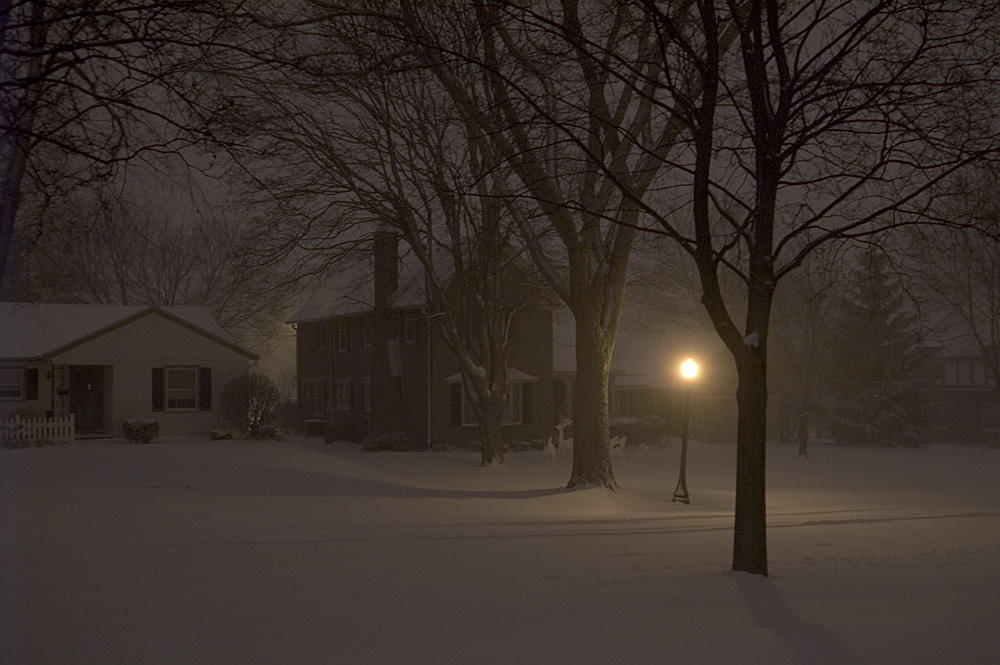
Here in Wisconsin we awoke to a beautiful falling snow, the first of the season. The snow's late arrival on the first of the new month reminds me of 2000, when we had 50 inches of snow in the month of December—second highest monthly total on record for this area—and almost none at all during the rest of the winter.

Zander gets treated to an incredibly rare snow day—both the amount and the timing of the snows has to be just right for the schools to close in Wisconsin—and the puppy, who has never experienced snow before, was afraid to go out at first. She kept whimpering and high-tailing it back to the door, and she pooped on the deck (we know what that makes it, arrrrr), which had me out there with the old plastic bag. Later, she snuck out past me when I was taking these pictures and went tearing around delightedly before succumbing to my alpha-dog authority and returning on command.

When I was younger, I would have been out trudging around in a pretty new snowfall like this, camera under my coat or tripod across my shoulder, seeing the snow as a photo-opportunity, and somewhere around here I have a lovely black-and-white 4x5 negative of a setting moon at dawn over Rock Creek Parkway, in Washington, D.C., after an ice storm, a shot I nearly froze my nodal points off to get. There's nothing wrong with exercise, of course, but as the years have passed I've realized that that's just not the kind of photographer I am. I took these from the front door, just before dawn, toasty and warm in robe and slippers.

Posted by: MIKE JOHNSTON